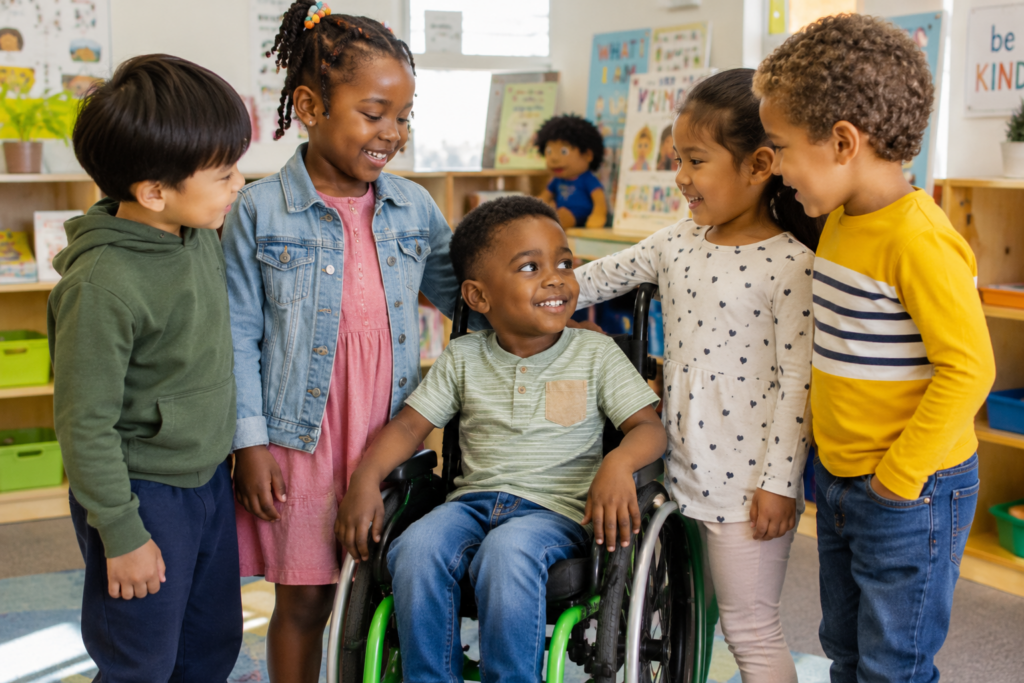
Your toddler points at another child’s wheelchair at the park and asks, loudly, “Why does she have that?” Your face goes warm. You’re not sure whether to shush your child or actually answer.
Take a breath. This moment isn’t a problem. It’s an opportunity.
Curiosity about differences is a healthy part of growing up. Disability Pride Month, celebrated every July, gives parents a good reason to lean into these questions instead of avoiding them.
What Is Disability Pride Month?
Disability Pride Month marks the anniversary of the Americans with Disabilities Act, a law that helped people with disabilities fully take part in everyday life. For young children, the idea is simple: everybody is different, and different is not something to fear.
Why Talking About It Early Matters
Children notice differences long before they can talk about them. By toddlerhood, they’re already forming ideas about what “normal” looks like, whether you’ve discussed it or not.
When questions get brushed aside, children can quietly learn that disability is uncomfortable to talk about. A simple, honest answer does far more good: “Her legs work differently than yours, so the wheelchair helps her get around, just like your feet help you.” For more guidance, see talking about differences with your child.
What Inclusion Looks Like in the Classroom
In an inclusive classroom, children with and without disabilities learn side by side every day. Children with special needs practice communication and social skills with peers, while classmates naturally pick up patience and kindness.
This often looks like:
- Therapists working in the classroom, so support happens without pulling a child away from friends
- Teachers adapting activities so every child can join in at their own level
Simple Ways to Talk About It at Home
- Answer questions honestly, using words your child understands.
- Read a picture book featuring a character with a disability, then talk about it.
- Point out that everyone has things that come easy and things that take more work.
- Use “different” instead of “wrong” or “broken.”
Everyday Moments Build Empathy
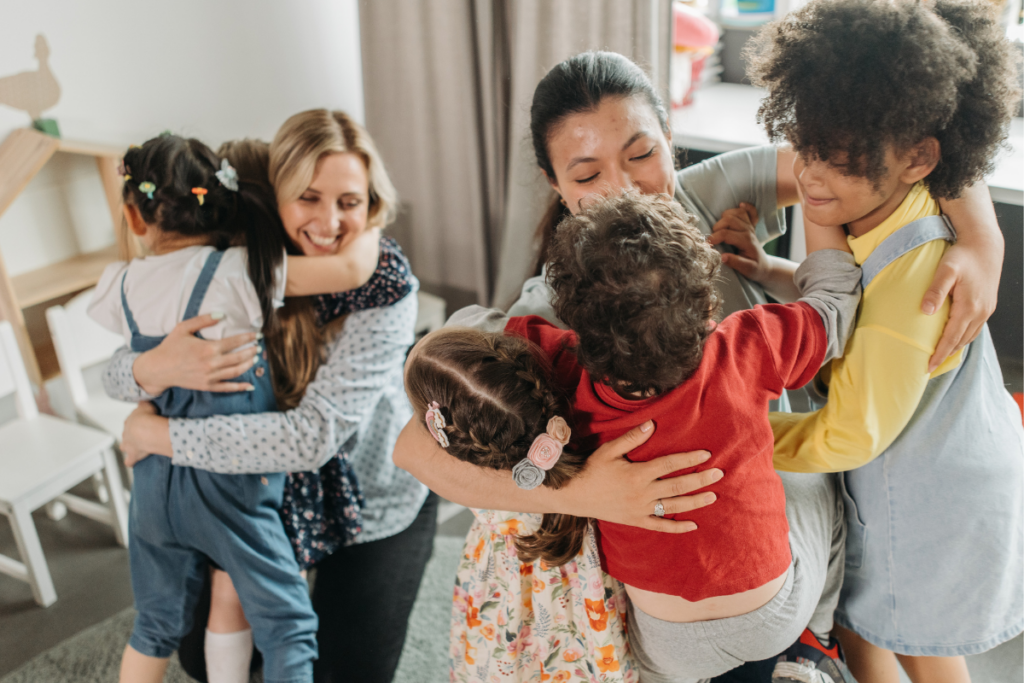
Think of a preschooler waiting her turn on the slide while a classmate takes longer to climb the steps. Or a toddler insisting on putting his own shoes on, while a friend nearby uses an adaptive tool for the same task. These small, repeated moments teach children that everyone moves through the world differently, and that’s okay.
Every child, whether they have a diagnosed disability or not, grows at their own pace. That’s exactly why inclusive classrooms work so well.
Raising Kind, Inclusive Kids
Disability Pride Month offers a natural moment to start conversations that matter beyond July. At FLOE Academy, inclusion isn’t a once-a-year theme. It’s how our classrooms work every day, with children of all abilities learning and growing side by side. To see the difference this makes, read more about why inclusive classrooms help every child grow. We’d love to have you visit and meet our teachers.
Come see what an inclusive, welcoming classroom feels like for your child. We’re here to support you every step of the way on your parenting journey.
📞 Call us at (615) 239-8261
🌐 Visit www.floeacademy.com
📧 Email us at floeacademy@gmail.com
Recent Posts
-
 Look Who’s Helping! Simple Kindness Challenges for Preschoolers
 -
 Simple Mindfulness Moments for Busy Toddlers and Preschoolers
 -
 Simple Ways to Encourage Healthy Eating Habits in Preschoolers
 -
 Is My Child Ready for Kindergarten? A FLOE Readiness Checklist
 -
 Back-to-School Vaccines Nashville Parents Should Know Before September