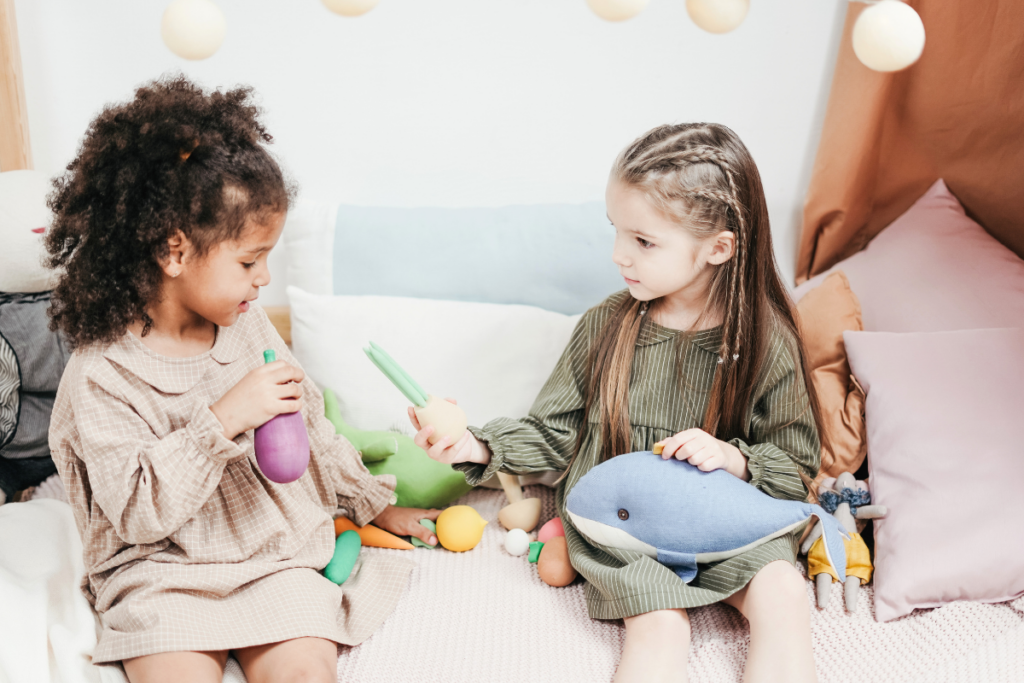
Two preschoolers both want the same red truck. One grabs it. The other yells. Your instinct might be to swoop in immediately and solve it for them. It’s a hard instinct to resist.
But that moment of tension is actually valuable. Learning to work through small conflicts with a friend, without an adult handing over the solution, is one of the most important skills a preschooler can build.
Why Letting Kids Work It Out Matters
When adults solve every disagreement, children miss the chance to practice something they’ll need for life: figuring out how to get along with people who want different things than they do.
Working through small conflicts builds patience, communication, and problem-solving skills. Every successfully navigated disagreement, even a clumsy one, builds a little more confidence for the next. Over time, these small wins add up to real social resilience.
What Independent Problem Solving Looks Like
Given the chance, most preschoolers can offer a suggestion, propose a trade, or simply wait their turn, especially with some practice. Stepping back doesn’t mean stepping away. A teacher or parent nearby can offer a calm prompt, like “What could we try?”, without handing over the answer outright.
Simple Ways to Support This at Home
- Narrate the problem out loud: “You both want the truck. What could we do?”
- Offer a couple of options rather than one fixed solution, so children practice choosing.
- Resist jumping in during the first few seconds of a disagreement. Give it a moment.
- Praise the process, not just the outcome: “You found a way to share. That was hard, and you did it.”
- Practice problem-solving language during calm moments, not just during conflicts, so the words feel familiar when tension shows up later.
When Adults Should Step In
Independence has limits, and that’s okay. Children still need adults for support with big emotions or unsafe situations, and knowing the difference isn’t always obvious to a young child. Learning to recognize when a feeling is too big to manage alone is its own important skill. You can read more about teaching kids when to ask for help.
A good rule of thumb: step in for safety, step back for everyday squabbles over toys, turns, and space.
Every Child Builds This Skill Differently
Some children pick up negotiation and compromise quickly, while others need more practice and patient modeling first. That’s completely normal. What matters is giving your child steady chances to try, even when the solution they land on isn’t the one you would have chosen.
Come see how our teachers guide, rather than solve, so children build real problem-solving confidence. We’re here to support you every step of the way on your parenting journey.
📞 Call us at (615) 239-8261
🌐 Visit www.floeacademy.com
📧 Email us at floeacademy@gmail.com
Recent Posts
-
 World Youth Skills Day: Life Skills Preschoolers Learn Every Day
 -
 How Working Parents Can Stay Connected to Their Child’s Learning
 -
 Why Summer Play Is Essential for Brain Development in Young Children
 -
 Outdoor Activities That Build Early Learning Skills
 -
 Helping Preschoolers Solve Problems Together Without Adults Stepping In