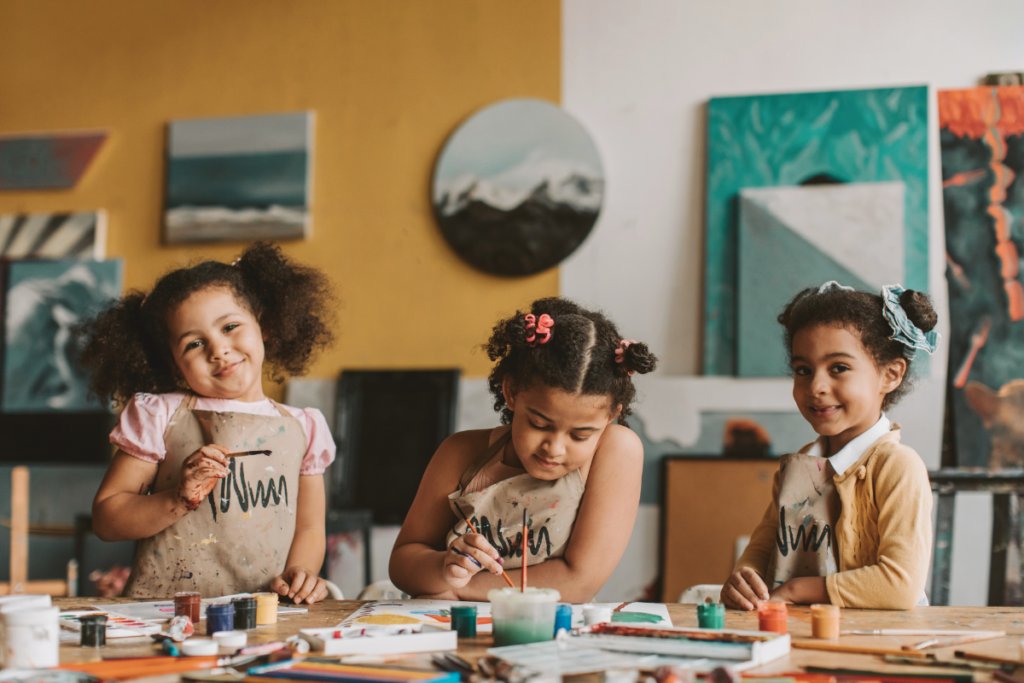
Your preschooler comes home talking about “my best friend” one day, then insists that same child is “not my friend anymore” the next. Take heart. Friendship skills take real practice, and preschoolers are just getting started.
Watching your child navigate these early ups and downs can feel confusing, especially when yesterday’s best friend becomes today’s biggest frustration. It helps to remember that this back and forth is completely normal, and it’s actually a sign your child is learning something important.
Why Early Friendships Matter
Learning to make and keep friends is one of the biggest jobs of early childhood. Through friendships, children practice sharing, taking turns, and working through small conflicts, skills that carry into every relationship they’ll build later in life.
These skills don’t come overnight. They grow through repetition, guidance, and plenty of gentle trial and error.
What Friendship Looks Like at Different Ages
Toddlers often play next to each other rather than directly together, building blocks side by side without much interaction. This is a normal, healthy stage, not a sign your child is behind.
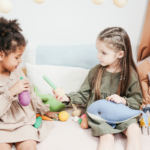
Preschoolers start engaging in cooperative play, working together on a pretend game or taking turns on the swing. This stage brings plenty of small conflicts, and that’s where real learning happens.
Everyday Moments That Build Social Skills
- A group of preschoolers negotiating who goes first on the slide
- Two children working out how to share one favorite toy
- A child comforting a classmate who’s upset
- Friends solving a small disagreement about the rules of a pretend game
These moments look messy in the middle, but they’re exactly how children learn empathy and cooperation. A teacher stepping in with a calm question, like “What could we try instead?”, can turn a squabble into a real lesson.
How Parents Can Help at Home
- Narrate feelings during conflicts: “You’re frustrated because you wanted a turn too.”
- Role-play tricky situations, like asking to join a game, using stuffed animals or dolls.
- Praise specific behaviors, such as sharing, rather than general praise like “good job.”
- Arrange simple playdates with one friend at a time, since smaller groups are easier to manage.
- Avoid jumping in too quickly. Give your child a chance to work through small conflicts first
A Classroom Built for Connection
Classrooms play a huge role in friendship building too. When every child feels like they belong, whatever their personality, pace, or ability, friendships have room to grow naturally. That sense of belonging shapes how confidently a child reaches out to others. You can read more about creating a sense of belonging for every child in early education.
Every Child Makes Friends at Their Own Pace
Some children make friends easily, while others warm up more slowly, and that’s perfectly okay. What matters most is giving your child steady practice, patient guidance, and plenty of chances to try again.
Come see how our classrooms nurture friendship and belonging every day!
📞 Call us at (615) 239-8261
🌐 Visit www.floeacademy.com
📧 Email us at floeacademy@gmail.com
Recent Posts
-
 World Youth Skills Day: Life Skills Preschoolers Learn Every Day
 -
 How Working Parents Can Stay Connected to Their Child’s Learning
 -
 Why Summer Play Is Essential for Brain Development in Young Children
 -
 Outdoor Activities That Build Early Learning Skills
 -
 Helping Preschoolers Solve Problems Together Without Adults Stepping In