
Walking through a preschool for the first time, it’s easy to get swept up in bright bulletin boards and cheerful murals. But a beautiful room doesn’t always tell you what’s actually happening for the children inside it. Knowing what to look for beyond the decor can help you feel confident in your choice.
Start by paying attention to the relationships in the room. A high-quality program feels warm and personal, not just organized. Teachers should know each child by name, respond to their individual cues, and speak to them with the same patience and respect they’d want for their own child. That same sense of being known and valued is what we mean when we talk about creating belonging for every child in a classroom, and it shows up in the small moments, not just the big ones.
Look at How the Environment Is Designed
Quality shows up in the details of a classroom’s setup. Materials should be within a child’s reach, activities should match the developmental stage of the children using them, and the space should support independence. Low shelves with labeled bins, child-sized furniture, and rest areas set up for easy transitions are all small signs that a program has thought carefully through what each stage of childhood actually needs.
Ask About Ratios and Daily Structure
Low child-to-teacher ratios matter because they allow for more individual attention and safer supervision. A quality program can also clearly explain its daily rhythm, including meals, rest time, and a mix of structured and free play, rather than describing a vague, unstructured day.
Notice How the Program Talks About Every Child
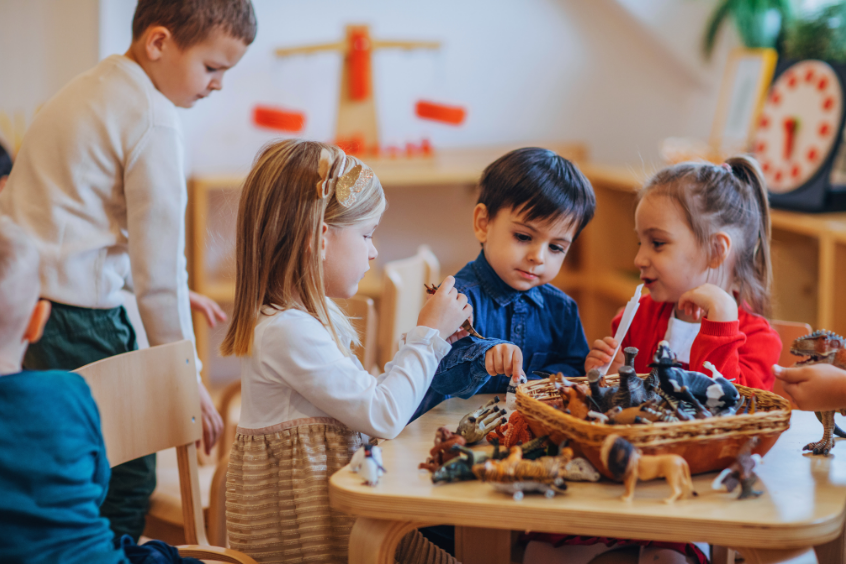
A strong preschool program doesn’t describe children in terms of who fits in easily and who doesn’t. Instead, it talks about meeting each child where they are. Programs that welcome children of all abilities into the same classroom, rather than separating them out, tend to build stronger social skills in every child involved, not just the ones receiving extra support.
Pay Attention to Communication With Families
Quality programs treat parents as partners, not bystanders. Ask how teachers share updates about your child’s day, how concerns are handled, and how easy it is to reach a teacher directly when something comes up.
Trust Your Instincts Too
Checklists matter, but so does how a place feels. If children seem engaged, teachers seem genuinely happy to be there, and your questions are answered openly, that combination is hard to fake.
Choosing a preschool is one of the bigger decisions a parent makes early on, and it’s worth taking your time. If you’d like to see what these signs look like in practice, we’d love to show you around our preschool program here at FLOE.
Future Leaders of Excellence Academy
📞 (615) 239-8261
📧 floeacademy@gmail.com
🌐 www.floeacademy.com