
Ever find yourself in the middle of a playdate that suddenly turns into a “mine!” shouting match over a favorite toy? Yep, we’ve all been there! Teaching kids the art of turn-taking can sometimes feel like trying to herd a flock of very enthusiastic, very independent squirrels. But fear not, because building that “patience power” is a crucial skill for social development, and it absolutely can be taught – with a little creativity and a lot of encouragement!
At Floe Academy, we know that successful play isn’t just about having fun; it’s about learning vital social skills like sharing, cooperation, and yes, turn-taking. These are the building blocks for healthy friendships and navigating the world around them.
So, how do we gently guide our little ones towards becoming turn-taking pros? Let’s dive into some playful and practical strategies:
1. Start Early and Simple: You can begin teaching turn-taking even with babies! Simple back-and-forth games like rolling a ball, peek-a-boo, or passing a toy are excellent ways to introduce the concept of “my turn, your turn.”
2. Narrate the Action: As you play, verbally point out the turns. “My turn to build, then your turn! Now it’s your turn to add a block!” This helps connect the action with the language. Use a consistent phrase like “my turn” and “your turn.”
3. Use Visual Cues: For younger children, visual aids can be incredibly helpful. A small hourglass sand timer, a special “waiting spot” for a toy, or even just holding up one finger for “my turn” and two for “your turn” can make the abstract concept of waiting more concrete.
4. Model Good Turn-Taking: Your child learns so much by watching you. When you’re playing together, consciously take turns. “My turn to deal the cards, then your turn to pick one.” Let them see you waiting patiently and respecting others’ turns.
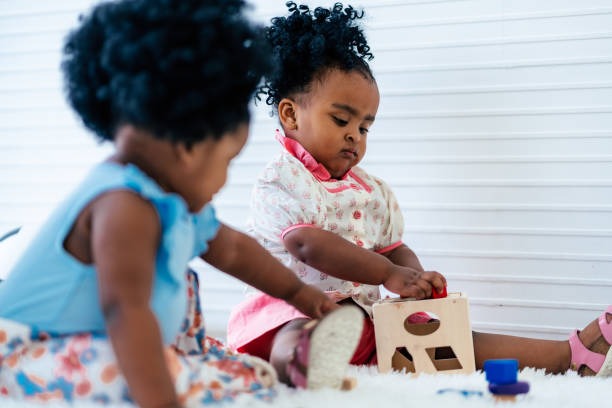
5. Practice with Structured Games: Board games and card games are natural teachers of turn-taking. Even simple games like “Candy Land” or “Memory” require players to wait for their turn. This provides a fun, low-stakes environment to practice.
6. Offer Alternatives (When Waiting is Hard): Sometimes, waiting is just too tough for little ones. Have a small “waiting activity” ready – a few blocks, a drawing pad – that they can engage with while they wait for their turn with a desired toy.
7. Praise Their Patience: When your child successfully takes a turn or waits patiently, shower them with specific praise! “Wow, you waited so patiently for your turn with the swing, that was excellent listening!” Positive reinforcement goes a long way.
Teaching turn-taking is a marathon, not a sprint. There will be bumps and squabbles along the way, and that’s okay! The goal is to consistently encourage and model these essential social skills.
At Floe Academy, our engaging play-based learning environment naturally fosters these crucial social skills, helping children develop patience, cooperation, and the joy of shared play.
Discover the enriching programs at Floe Academy and see how we make learning fun!
📞 Call us at (615) 239-8261
🌐 Visit www.floeacademy.com
📧 Email us at floeacademy@gmail.com
Recent Posts
-
 Back-to-School Vaccines Nashville Parents Should Know Before September
 -
 Choosing Age-Appropriate Books for Every Stage of Toddlerhood
 -
 Squinting or Struggling? Signs Your Preschooler May Need an Eye Exam
 -
 A Farmers Market Field Trip Teaching Kids Where Food Comes From
 -
 World Youth Skills Day: Life Skills Preschoolers Learn Every Day