
Ever find yourself wondering if your sweet little one has developed a selective hearing superpower, especially when you’re trying to explain something important (like why we don’t draw on the walls)? You’re definitely not alone! It often feels like talking to a tiny, adorable brick wall. But what if I told you there are ways to connect that can make a huge difference in how much your toddler “hears” and understands? It’s all about respectful communication, and it’s a game-changer.
It’s easy to get frustrated when our carefully crafted instructions seem to bounce right off our toddlers. We often forget that their brains are still building the superhighways for understanding complex language, managing impulses, and seeing things from another person’s perspective. They’re not ignoring you out of defiance; they’re often just operating on a different wavelength, or simply too engrossed in the amazing world of their own play!
So, how do we bridge that gap and foster an environment where our toddlers feel heard and, in turn, are more likely to listen?
Get Down to Their Level (Literally!)
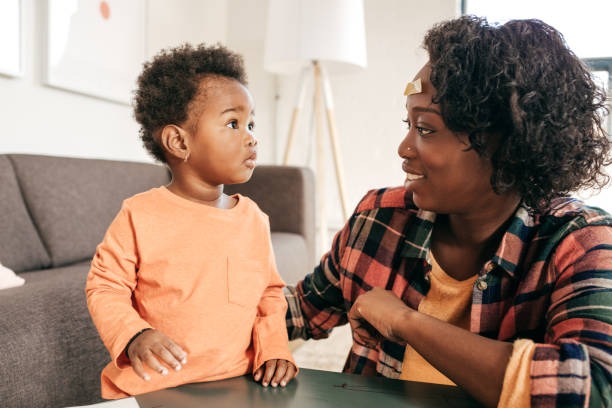
One of the simplest yet most effective tips is to physically get down to your toddler’s eye level. Kneel, squat, or sit. This subtle shift makes a huge difference. It feels less confrontational and more like you’re having a chat, rather than delivering a decree from on high. When you’re at eye level, you can also make eye contact, which helps them focus on you and the important message you’re trying to convey.
Keep It Short and Sweet
Toddlers have very short attention spans. Long, elaborate explanations are likely to be lost in translation. Use simple, direct language. Instead of, “Please put your toys away nicely in the box now because we’re going to have dinner soon and we need a clean space,” try, “Time to put toys in the box!” You can always add a “thank you” or a smile.
Focus on What TO Do, Not What NOT To Do
Our natural inclination is to tell them what not to do (“Don’t run!”). But for toddlers, this can be confusing. It’s often more effective to tell them what you want them to do. “Please walk slowly” is clearer and more actionable than “Don’t run.” This shifts the focus from forbidden actions to positive behaviors.
Give Them Choices (When Appropriate)
Offering choices gives toddlers a sense of autonomy and respect, making them more cooperative. Instead of demanding they wear a specific outfit, try, “Do you want to wear the blue shirt or the red shirt today?” Of course, limit choices to things you’re okay with them choosing! This also helps them practice decision-making skills.
Acknowledge Their Feelings
Sometimes, what looks like not listening is actually a big feeling that needs to be acknowledged. “You seem really frustrated that your tower fell down. That’s okay to feel sad. Let’s try building it together.” When you validate their emotions, they feel understood, and are often then more receptive to guidance.
Remember, building respectful communication with toddlers is an ongoing journey, not a destination. There will be days of seamless connection and days when it feels like you’re speaking entirely different languages. The key is consistency, patience, and a whole lot of love.
Explore the amazing programs at Floe Academy today! We’re here to support you every step of the way on your parenting journey
📞 Call us at (615) 239-8261
🌐 Visit www.floeacademy.com
📧 Email us at floeacademy@gmail.com
Recent Posts
-
 Back-to-School Vaccines Nashville Parents Should Know Before September
 -
 Choosing Age-Appropriate Books for Every Stage of Toddlerhood
 -
 Squinting or Struggling? Signs Your Preschooler May Need an Eye Exam
 -
 A Farmers Market Field Trip Teaching Kids Where Food Comes From
 -
 World Youth Skills Day: Life Skills Preschoolers Learn Every Day